Your first boxing class: what to expect, what to bring, how to pace it
A practical route through the door — from hand wraps and stance to why the last round is supposed to feel hard.
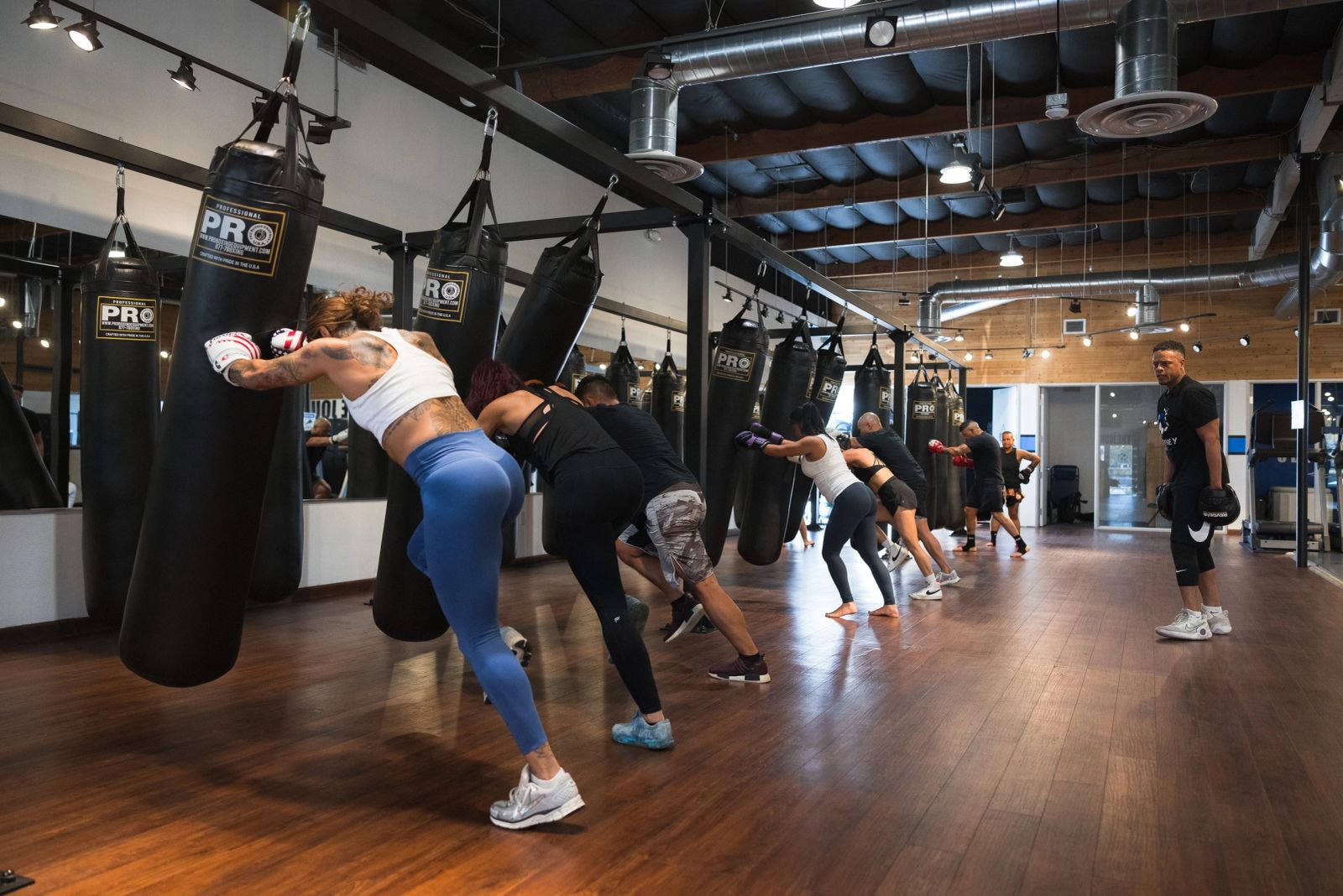
The first boxing class is mostly unknown. You do not know where to stand, how hard to hit, or whether your hands are supposed to hurt. Here is the honest version of what happens, so the only surprise left is how good the shower feels afterward.
Boxing looks simple from outside the ropes: two people, two hands, one bag. Inside the class, it is a skill with a posture, a rhythm and a vocabulary. The first session is not a test. It is a lesson in where your feet belong.
Before you go
Call or text the gym and ask two questions: what should I bring, and which class should I take first? At Odyssey, the answer depends on the day and on you. A class that fits your week is worth more than a class that sounds impressive.
Wear shoes you can move in and clothes you can sweat in. Bring water. If you have hand wraps, bring them; if you do not, ask before you buy anything. The gym will tell you what the class actually needs, which is better than guessing from a video.
The shape of a class
Most boxing classes follow the same arc. A warm-up gets the shoulders, hips and feet moving. The coach teaches or reviews stance and guard. Then the class drills footwork, punches or combinations, often on bags and sometimes on pads. Conditioning comes at the end, usually in rounds.
Rounds matter. Boxing is built on short bursts of work followed by a rest. That structure is why the class can leave you gassed and still teach you something. You are not supposed to sprint through the whole hour. You are supposed to work, recover, and work again with better technique.
You will finish tired, but you will also finish knowing more than you did at the start.
Pace the first three rounds
New boxers usually spend too much in the first round and then spend the rest of the class surviving. Resist that. Hit at a pace where your guard stays up and your feet stay under you. A clean jab at seventy percent beats a wild hook that throws you off balance.
If you need to step out, step out. Tell the coach. Nobody is keeping score on your first day, and the coach would rather adjust the work than watch you fade.
What to do with your hands
Your hands will be the first thing to complain. Wrapping protects the wrist and knuckles; gloves protect the hand and the person on the other side of the bag. Ask the coach to check your wrap before class. A loose wrap is worse than no wrap because it gives you a false sense of support.
You do not need to hit the bag as hard as you can. The bag is a teacher, not an opponent. Work on returning your hand to your face after every punch. That habit is worth more than a heavy shot.
Sparring is not the entry point
Group boxing classes at Odyssey center on technique, bags and conditioning. Sparring is a separate conversation to have with a coach when you are ready. There is no pressure to get in the ring on day one, and no reason to rush it.
The day after
Expect your shoulders, calves and hands to feel new. Drink water, eat protein, and take an easy walk. If you are sore in a way that feels sharp rather than tired, say something. Coaches would rather hear it early.
Then come back. The second class is where the first one starts to make sense. The stance feels less strange, the rounds feel less endless, and the room starts to look like a place you belong.
Odyssey runs boxing inside a 300+ class month, alongside Muay Thai, Jiu-Jitsu, strength and recovery. Start with a free class, and let the coach point you to the next one.
Practice the rhythm at home: three minutes of work, one minute of rest.
Book the free class.
A guide can point the way. A coach can watch the round, fix the stance and tell you what to do next. Your first class is free.
(619) 701-6793 · 4.8★ from 274 Google reviews
30-day money-back guarantee